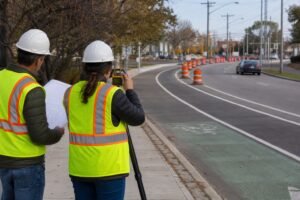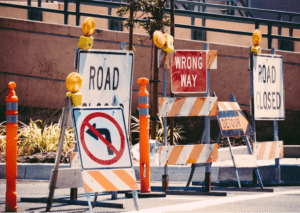
A temporary traffic control plan must account for the real roadway—not just a standard diagram—including geometry, sight distance, speeds, driveways, transit, pedestrians, staging, and nearby work.
Two projects with similar work may need different setups because the surrounding conditions change how drivers and other road users encounter the zone.
How Site Constraints Change a Temporary Traffic Control Plan: an expert checklist
- Document curves, grades, intersections, and lane widths
- Identify schools, businesses, driveways, and transit stops
- Measure available taper and buffer space
- Account for equipment movement and material staging
- Review pedestrian, bicycle, and emergency access
When space is limited, the solution may require phasing, adjusted work hours, different devices, or coordination with the agency. Compressing a standard layout without analysis can create conflicts.
How to make the next decision
Start with documented conditions rather than assumptions. Safety Network Traffic Plans provides information and services relevant to site constraints traffic control plan; the correct scope still depends on the property, equipment, documents, or project conditions involved.
Review the related guidance on portfolio and locations. These pages explain the available service context before you request a site-specific recommendation.
Questions to ask a provider
- What information do you need before recommending a scope?
- Which assumptions still need field verification?
- What is included, excluded, and documented?
- What conditions would change the recommendation?
Clear answers help customers compare scope and process instead of choosing from a headline alone. Keep records, photos, plans, model numbers, or ownership documents that are relevant to the service.
Frequently asked questions
Why does sight distance matter?
Road users need enough distance to recognize, understand, and respond to changed conditions before reaching workers or queues.
Do driveways need to remain open?
Access requirements vary, but affected owners, agencies, and emergency services may require planned access or advance coordination.
How are bike lanes handled?
The plan should address bicycle routing and conflicts using applicable agency guidance and project conditions.
Can field crews move devices when space is tight?
Field adjustments should follow the approved process and be reviewed when they materially change the plan.
Request a business-specific review
Use the Safety Network Traffic Plans contact or scheduling page to describe your situation and confirm the appropriate next step.