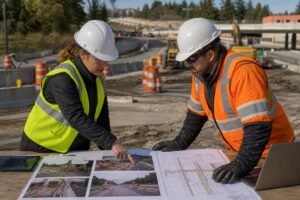
A successful traffic control plan begins with precise, reliable data. To develop a well-structured plan that ensures safety and efficiency, an effective site survey is essential. Whether you’re managing road construction, handling event traffic, or creating detour routes, gathering accurate site data will form the foundation of your traffic control strategy. At Safety Network Plans, we specialize in conducting thorough site surveys that provide you with the information necessary to create optimal traffic management solutions. In this article, we’ll discuss the importance of accurate data collection during your site survey and how it leads to better traffic plans.

1. Why Accurate Site Surveys Matter
Accurate site surveys are critical for developing an effective traffic control plan. With precise data, you can design efficient traffic routes, identify potential hazards, and ensure safety for both workers and drivers. An accurate survey forms the backbone of a robust traffic control plan, ensuring that it meets all necessary safety regulations.
- Why It Matters: Incorrect or incomplete data can lead to poor traffic flow, increased safety risks, and regulatory issues.
- How It Helps: An accurate survey helps you create a well-informed plan, improving safety, efficiency, and compliance with regulations.
2. What Data to Collect During Your Site Survey
A comprehensive site survey collects various types of data to ensure a detailed understanding of the site. Key factors to consider include:
Road Layout and Dimensions
Measure the width of roads, lanes, intersections, and curbs. Pay attention to any obstacles like utility poles, signs, or traffic signals that may impact traffic flow. These measurements are vital for determining how vehicles will navigate through your work zone.
Existing Traffic Control Devices
Identify existing traffic signals, signs, and barriers. This helps determine if the current system is sufficient or needs to be upgraded or adjusted to fit your needs.
Sightlines and Visibility
Inspect key points such as intersections and curves where visibility might be limited. Poor sightlines can lead to accidents, so understanding where extra signage or barriers may be needed is essential.
Pedestrian and Cyclist Routes
If applicable, assess pedestrian walkways and bike lanes, ensuring that your traffic plan will accommodate them safely and efficiently.
- Why It Matters: Missing data like road dimensions or safety concerns could result in inefficient or dangerous traffic control.
- How It Helps: A thorough site survey ensures all necessary aspects are covered, leading to a safer and more effective traffic control plan.
3. Using the Right Tools to Gather Data
Modern technology plays a critical role in improving the accuracy and efficiency of site surveys. Consider utilizing:
- Drones: For large or hard-to-reach areas, drones can provide aerial views and help gather topographical data.
- GPS and Mapping Software: GPS tools offer precise measurements and help with mapping out traffic flow and control setups.
- Laser Scanners: Laser scanning provides detailed 3D models of the area, offering a deeper understanding of the site layout.
- Why It Matters: Traditional measuring tools can sometimes be time-consuming and inaccurate.
- How It Helps: Advanced tools ensure the data you collect is highly accurate, reducing human error and speeding up the survey process.
4. Incorporating Stakeholder Input
During your survey, it’s essential to involve local stakeholders, such as city planners, construction teams, and traffic authorities. Their input provides valuable insights into local traffic patterns, regulatory requirements, and potential challenges.
- Why It Matters: Ignoring the input of stakeholders may lead to incomplete data or missed regulatory requirements.
- How It Helps: By collaborating with others, you gain a more comprehensive view of the site, which improves the overall quality of your traffic control plan.
5. Plan for Flexibility
A good traffic control plan should not be static; it should be flexible enough to adapt to future changes. During the site survey, look for potential future changes, such as new construction, increased traffic volume, or seasonal shifts in road conditions. Accounting for these factors allows you to develop a traffic plan that is adaptable to evolving needs.
- Why It Matters: Unexpected changes in road conditions or project requirements can affect traffic flow, requiring immediate changes to the control plan.
- How It Helps: Designing a flexible traffic control plan ensures that adjustments can be made quickly and efficiently, reducing delays and complications.
6. Integrating Data into Your Traffic Plan
Once the survey is complete, you’ll need to integrate the data into your traffic control plan. This includes designing detours, establishing safety zones, and placing traffic signals or barriers where necessary. Make sure to incorporate all collected data, from road dimensions to safety concerns, to create an effective plan.
- Why It Matters: A poorly integrated traffic plan may miss key safety measures or fail to manage traffic flow effectively.
- How It Helps: By ensuring all data is used in the plan, you create a seamless and well-organized traffic management system that meets safety and operational standards.
7. Why Choose Safety Network Plans for Your Site Survey Needs?
At Safety Network Plans, we specialize in providing thorough, accurate site surveys to ensure the success of your traffic control plan. Our team of experts uses the latest technology and industry best practices to gather precise data, allowing us to create customized, effective traffic management solutions for any project.
- Why It Matters: Having an experienced team conducting your site survey ensures that your data is reliable, comprehensive, and actionable.
- How It Helps: With Safety Network Plans, you can trust that your traffic control plan will be based on accurate, real-time data and comply with all necessary safety regulations.
Conclusion
An accurate site survey is the foundation of any successful traffic control plan. By collecting precise data on road layout, traffic flow, and safety concerns, you ensure that your plan will be effective and compliant with regulations. At Safety Network Plans, we provide expert site surveys and traffic control solutions that help you manage any construction or event project with confidence. Contact us today to learn how our services can support your traffic management needs.
Contact Us
For expert site surveys and traffic control solutions, contact Safety Network Plans:
- Phone: Call (559) 291-8000
- Email: help@safetynetworkplans.com
- Website: safetynetworkplans.com